
What Is E-E-A-T and Why It Matters for Your Website's SEO
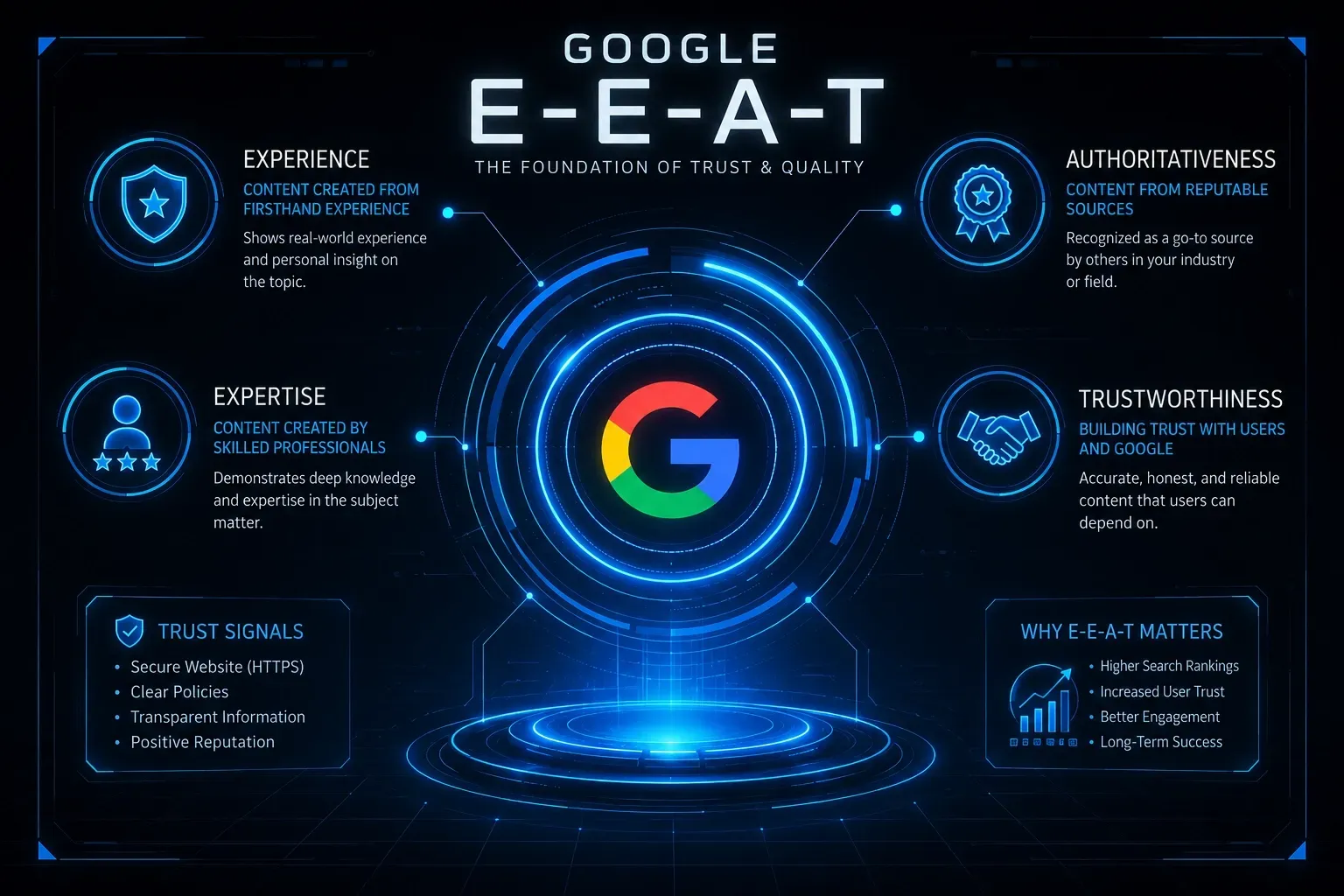
If you've spent any time researching SEO, you've probably run into the acronym E-E-A-T and wondered whether it's another passing buzzword or something you actually need to worry about. It's the latter. E-E-A-T shapes how Google evaluates your website, and increasingly, how AI tools like ChatGPT, Perplexity, and Google's AI Overviews decide whether to trust your business enough to mention it at all.
Here's what E-E-A-T means, why it exists, and what a small business can realistically do about it.
1. What E-E-A-T Actually Stands For
E-E-A-T is an acronym Google uses in its Search Quality Rater Guidelines: Experience, Expertise, Authoritativeness, and Trustworthiness . It isn't a single ranking factor you can check off a list. Instead, it's a framework Google's human quality raters (and, by extension, its algorithms) use to judge whether content deserves to rank, especially for topics that affect a person's health, finances, safety, or major life decisions.
Google added the second "E" for Experience in December 2022, expanding what was originally E-A-T. The change reflected a simple idea: expertise from a textbook is different from expertise earned by actually doing the thing. A roofer who has replaced hundreds of roofs in your county writes differently than someone who's only read about roofing, and Google wants to reward the former.
2. Breaking Down Each Letter
Experience asks: has the author or business actually lived this? For a landscaping company, that might mean showing real before-and-after photos of jobs, sharing specifics about local soil conditions, or describing a tricky drainage problem you solved for an actual client. First-hand, specific detail is the tell.
Expertise asks: does the creator have the knowledge or skill to speak on this topic? This is where credentials, certifications, years in business, and demonstrated know-how come in. A licensed HVAC technician writing about refrigerant regulations carries more weight than a generic content mill article.
Authoritativeness asks: is this business recognized, by others, as a go-to source? This is reputation-based: other sites linking to you, press mentions, industry associations, reviews, and citations across the web that consistently describe who you are and what you do.
Trustworthiness is the one Google weighs most heavily, and it's really the umbrella over the other three. Is your site secure? Is your contact information accurate and easy to find? Do your reviews look genuine? Does your content match reality? A beautifully written page loses all its value if the business behind it can't be verified.
3. Why This Matters More Than It Used To
Two things have raised the stakes. First, Google's Helpful Content system now applies E-E-A-T-style scrutiny across nearly all search results, not just "Your Money or Your Life" topics like medical and financial advice. Second, AI-generated answers, whether in Google's AI Overviews or in tools like ChatGPT, pull from sources that already look credible and well-attributed. If your site doesn't clearly establish who you are and why you should be believed, you're less likely to be cited by an AI assistant at all. This is the heart of what's now called AEO (Answer Engine Optimization) and GEO (Generative Engine Optimization): making your expertise legible not just to a person skimming search results, but to a machine deciding what to quote.
4. What This Looks Like in Practice for a Small Business
You don't need a journalism degree or a research lab to build strong E-E-A-T signals. Here's where to start:
- Author bios that mean something. If you write blog content, attach a real name, a photo, and a sentence or two about relevant experience, not just "Admin."
- Consistent business information. Your name, address, and phone number should match exactly across your website, Google Business Profile, and directory listings. Inconsistencies quietly erode trust signals.
- Original detail over generic filler. Specific project photos, real numbers, and local references beat vague claims like "years of experience" every time.
- Genuine reviews, actively managed. Respond to reviews, both good and bad. It shows a real business is paying attention.
- Structured data (schema markup). Adding JSON-LD schema to your site helps search engines and AI tools understand exactly who you are, what you offer, and how to verify it, rather than guessing from unstructured text.
- A clear "About" page. This is one of the first places both human visitors and AI crawlers look to confirm a business is legitimate.
Bringing It Together
E-E-A-T isn't a switch you flip once. It's a reflection of whether your website tells the truth about your business clearly, consistently, and with enough specific detail that both people and algorithms can verify it. The businesses that show up in search results and get cited by AI tools tend to be the ones that have simply documented their real expertise well, not the ones that have gamed a system.
If you're not sure where your site currently stands on Experience, Expertise, Authoritativeness, or Trustworthiness, that's exactly the kind of gap a website health check is built to catch.