
Digital Growth Strategies for Small Businesses
Growth Doesn't Come from One Tactic
Most small business owners I talk with have tried something online. A Facebook page that went quiet. A website built years ago. A Google listing nobody has touched since it was claimed. Each piece was a good idea on its own, but none of them were working together.
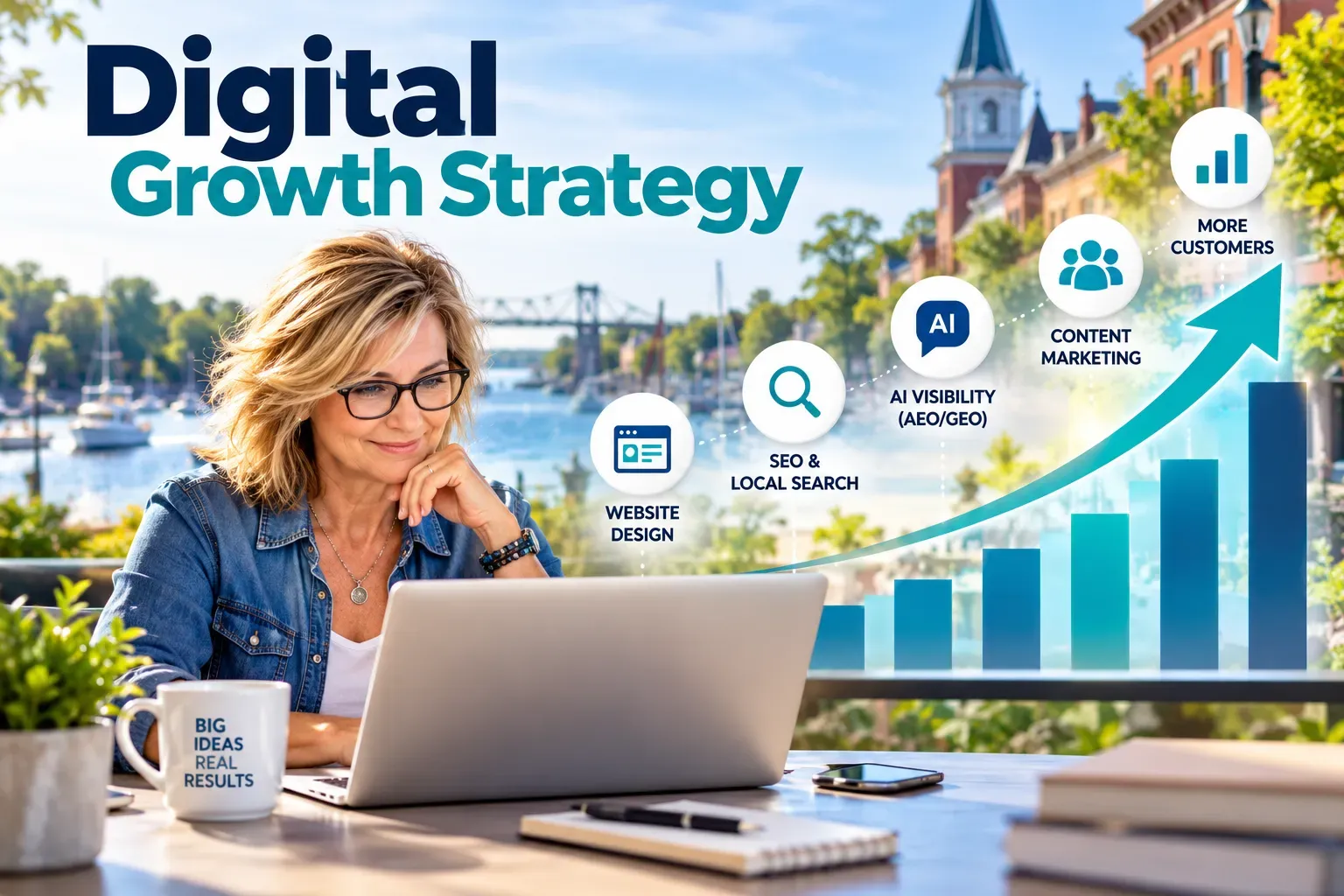
That's the difference between doing marketing and having a digital growth strategy. A strategy connects your website, your search presence, your reputation and your advertising so each one feeds the other.
The rules have also changed. Customers still search Google, but more of them now ask AI tools like ChatGPT, Gemini and Google's AI Overviews for recommendations. If those tools can't find clear, trustworthy information about your business, you won't be in the answer.
After 22+ years in digital marketing, here are the eight strategies I see make the biggest difference for small businesses in Eastern North Carolina, Southern Maryland and beyond.
1. Treat Your Website as the Foundation
Every other channel eventually sends people to your website. If it loads slowly, looks dated on a phone or makes visitors hunt for your phone number, you're paying to send traffic somewhere that doesn't convert.
A growth-ready website has:
- Fast load times on mobile , where most local searches happen
- A clear page for each service you offer, not one page that lists everything
- Obvious calls to action — call, book, request a quote — on every page
- Consistent name, address and phone (NAP) that match your other listings
- Structured data (schema markup) that tells search engines and AI tools exactly who you are and what you do
If your site is more than five years old, it's worth an honest look. A rebuild often does more for growth than any amount of advertising on top of a weak site.
2. Own Your Google Business Profile
For local businesses, your Google Business Profile is often the first thing a customer sees — before your website. It powers your spot in the map results and feeds the information Google shows in search.
The businesses that win the map pack tend to do the basics consistently:
- Choose the most accurate primary category, plus relevant secondary ones
- Keep hours, service areas and contact details current
- Add real photos of your work, your team and your projects
- Post updates and offers regularly
- Answer questions and respond to every review
One lesson I learned firsthand: if you move or change your address, update your profile carefully and have proof of your business location ready. Address changes can trigger verification reviews or even a suspension.
It's also smart to check old directory listings. Outdated addresses on sites like Yelp, LinkedIn or industry directories create mixed signals that weaken your local rankings. For more, see my Google Business Profile tips.
3. Optimize for Search Engines and AI Answers
Search optimization used to mean one thing: ranking on Google. Today it covers three related disciplines.
- SEO (Search Engine Optimization) targets traditional search results through keyword-focused pages, technical health, internal links and backlinks.
- AEO (Answer Engine Optimization) targets direct answers, voice search and featured results through clear question-and-answer content, concise definitions and structured data.
- GEO (Generative Engine Optimization) targets AI tools like ChatGPT, Gemini and AI Overviews through consistent business facts across the web, trusted mentions and entity-rich schema.
They build on each other. AI tools pull from the same sources search engines trust, so a technically sound, well-structured site with consistent information gives you a head start on all three.
The practical takeaway: write for real customer questions, keep your business details identical everywhere, and use schema markup so machines don't have to guess.
4. Publish Content That Answers Real Questions
Most small business blogs launch with a couple of posts and then go silent. That's a missed opportunity, because helpful content is how search engines and AI tools learn what you're an expert in.
You don't need to publish every week. You need to answer the questions your customers already ask you on the phone:
- "How much does it cost to…?"
- "How long does … take?"
- "Do I need … or …?"
- "What should I look for when hiring a …?"
One thorough, honest answer to a common question can bring in qualified visitors for years. Aim for one useful article a month, and link each one to the service page it relates to.
5. Build Reviews and Reputation on Purpose
Reviews influence who customers call, and they're one of the signals Google uses to rank local businesses. Yet many businesses wait for reviews to happen on their own.
Make asking a habit:
- Ask right after a job goes well, while the experience is fresh
- Send a direct link to your Google review form by text or email
- Respond to every review, positive or negative, politely and promptly
A thoughtful reply to a critical review often impresses future customers more than a dozen five-star ratings. It shows you care and that you stand behind your work.
6. Use Paid Ads with Dedicated Landing Pages
Organic growth takes time. Paid ads on Google or social media can bring in leads while your SEO builds momentum — but only if the click lands somewhere built to convert.
Sending ad traffic to your home page is one of the most common and expensive mistakes I see. A dedicated landing page matches the ad's message, focuses on one offer and gives the visitor one clear next step. That focus usually means more leads for the same ad spend. Learn more in Why Your Ad Traffic Needs a Dedicated Landing Page.
Start small, track every lead and scale what works.
7. Show Up Consistently on Social Media
You don't need to be on every platform. Pick the one or two where your customers actually spend time — Facebook and Instagram for most local businesses, LinkedIn for B2B, TikTok if your audience skews younger.
Consistency matters more than volume. A steady rhythm of project photos, behind-the-scenes moments, customer stories and helpful tips keeps you top of mind. Social activity also creates more mentions of your business online, which supports your visibility in AI-driven search.
8. Measure What Matters, Then Adjust
A strategy without measurement is a guess. At a minimum, connect your site to Google Analytics and Google Search Console, and watch your Google Business Profile insights.
Focus on the numbers tied to revenue:
- Phone calls and form submissions
- Direction requests and website clicks from your Google profile
- Which pages and searches bring in visitors who become customers
Review them monthly. Double down on what's producing leads and fix or drop what isn't.
Where to Start
You don't have to tackle all eight at once. Most businesses get the fastest return by fixing the foundation first: a solid website and an accurate, active Google Business Profile. Everything else works better on top of those.
Not sure where your business stands? Start with a free 5-Point Website Health Check from Oasis Grafx. I'll review your site's speed, mobile experience, search visibility and more, then show you the highest-impact fixes — no obligation.
Book a 15-minute call or reach me at nancy@oasisgrafx.com.